
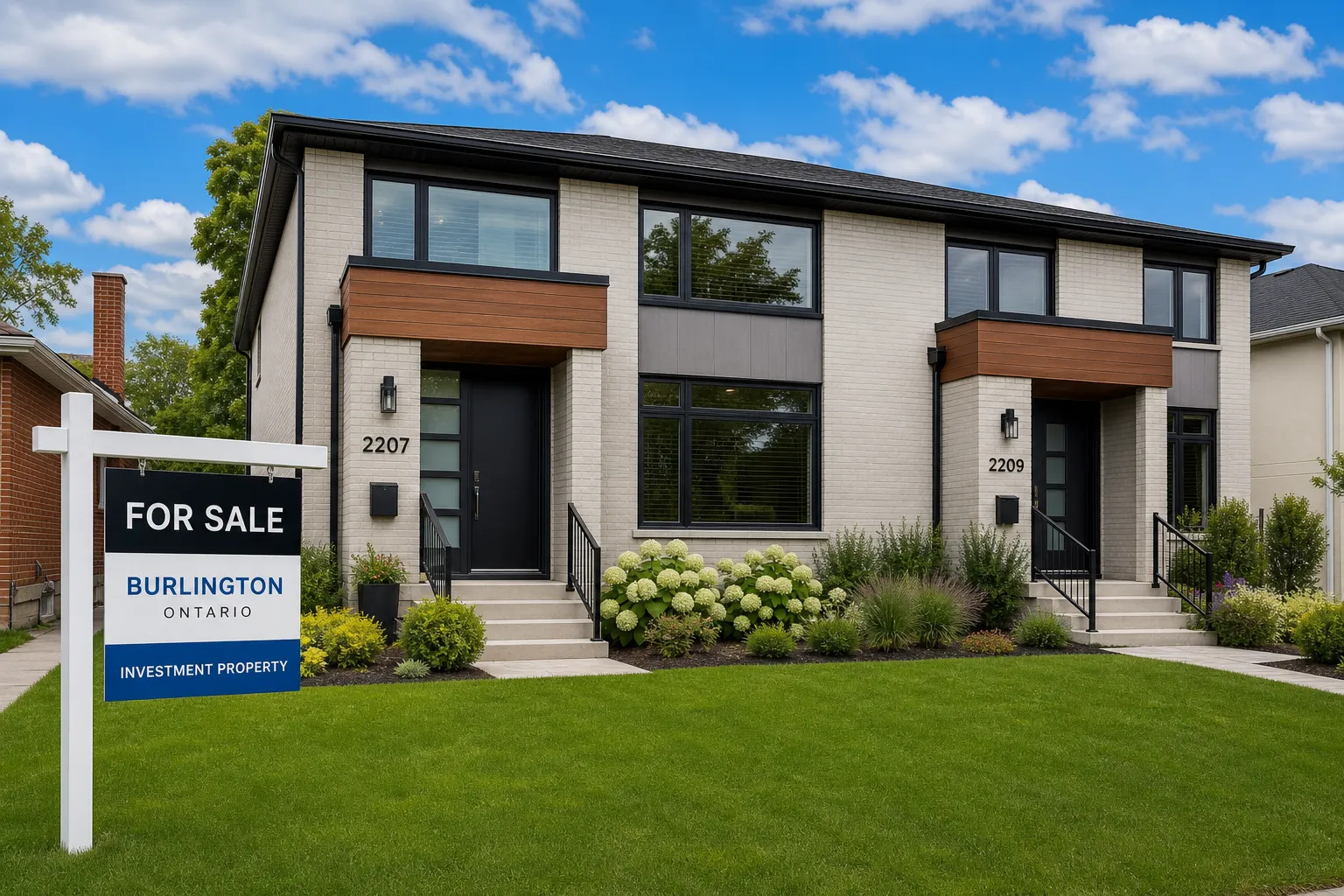
Down payment requirements for investment properties
In Canada, investment properties require a minimum down payment of 20% of the purchase price. This is because investment properties are not eligible for mortgage default insurance (CMHC insurance), which allows lower down payments on owner-occupied homes. The 20% minimum applies regardless of the purchase price — unlike primary residences where the percentage varies by price tier.
Some lenders may require 25-35% down for specific property types or if the borrower has multiple investment properties already. Condominium investments in popular Ontario markets like Burlington, Toronto, and Mississauga often fall in this higher range, particularly in buildings with high investor concentration ratios. Lenders view condo investments in oversupplied markets as riskier and compensate with higher equity requirements.
For portfolio investors with 4+ properties, many lenders cap their exposure and require larger down payments — sometimes 30-35% — and may limit the total number of financed properties to 6-10 depending on the institution. Planning your portfolio growth with these limits in mind is essential for long-term investors.
How rental income is qualified
Lenders typically include 50-80% of the gross rental income when calculating your debt ratios. The difference between gross rent and the included amount accounts for vacancy risk, property taxes, insurance, and maintenance costs. This is called a "rental offset" and varies by lender:
- Conservative lenders: Include 50% of gross rent — allows for 50% vacancy/expense buffer, which is the most common approach among big banks
- Moderate lenders: Include 70-80% of gross rent — typically requires a signed lease and proof of tenancy
- Aggressive lenders: May include 80-100% with strong supporting documentation like a 2-year rental history on a similar property
Some lenders require a signed lease agreement before closing to count rental income. Others may accept a market rent assessment from an appraiser. If you are buying a property without a tenant in place, some lenders will only count a portion of the potential rent — or none at all — which means you need to qualify based on your personal income alone. This is one of the most common surprises for first-time investors.
Cash-flow analysis for Ontario rental properties
Before purchasing an investment property, calculate your monthly cash flow using conservative numbers. Overestimating rent or underestimating expenses is the most common mistake new investors make. Account for:
- Expected rental income — use conservative estimates, accounting for 5-10% vacancy
- Mortgage payment — principal + interest at the qualifying rate, not the contract rate
- Property taxes — average 1.0-1.5% of property value annually, varying by municipality in Ontario
- Insurance — typically 15-25% higher than owner-occupied due to liability exposure
- Maintenance reserve — budget 1-2% of property value annually for repairs and capital improvements
- Property management fees — if applicable, 8-12% of gross rent
- Condo fees — for condominium investments, factor in monthly common element fees
- Utilities — if not passed through to tenants, budget $150-300 monthly depending on property size
A positive cash flow property (rental income exceeds all expenses including the mortgage) is ideal, but many Ontario investment properties — especially in high-demand areas — may break even or run slightly negative on a monthly basis. Lenders care more about your overall ability to service the debt than whether each individual property cash-flows positively.
Interest rate considerations
Investment property mortgage rates are typically 0.25-0.75% higher than comparable owner-occupied rates. Some lenders also require a higher qualifying rate (stress test) for investment properties. The rate premium reflects the higher risk that investors may default on investment properties before their primary residence during financial difficulty. Working with a broker who understands investment lending ensures you get the best available terms and know which lenders are currently most competitive for investment properties.
Tax implications every investor should understand
Mortgage interest on investment properties is tax-deductible, which is a significant benefit compared to primary residence mortgages. You can deduct the interest portion of your mortgage payments against your rental income. Additionally, capital costs like the appraisal, legal fees for the purchase, and financing costs may be deductible or added to the property's cost base. Speak with a tax professional familiar with Ontario real estate investing to ensure you are maximizing available deductions and properly reporting rental income.
Using equity from your primary residence
Many Ontario investors fund their first investment property down payment by accessing equity from their primary residence through a refinance or HELOC. This strategy allows you to leverage existing equity rather than saving a separate down payment from cash flow. The interest on the borrowed down payment funds may also be tax-deductible if used for investment purposes, making this a tax-efficient way to build a portfolio. However, it increases your overall debt exposure and means both properties are linked financially — a downturn could affect both simultaneously.